
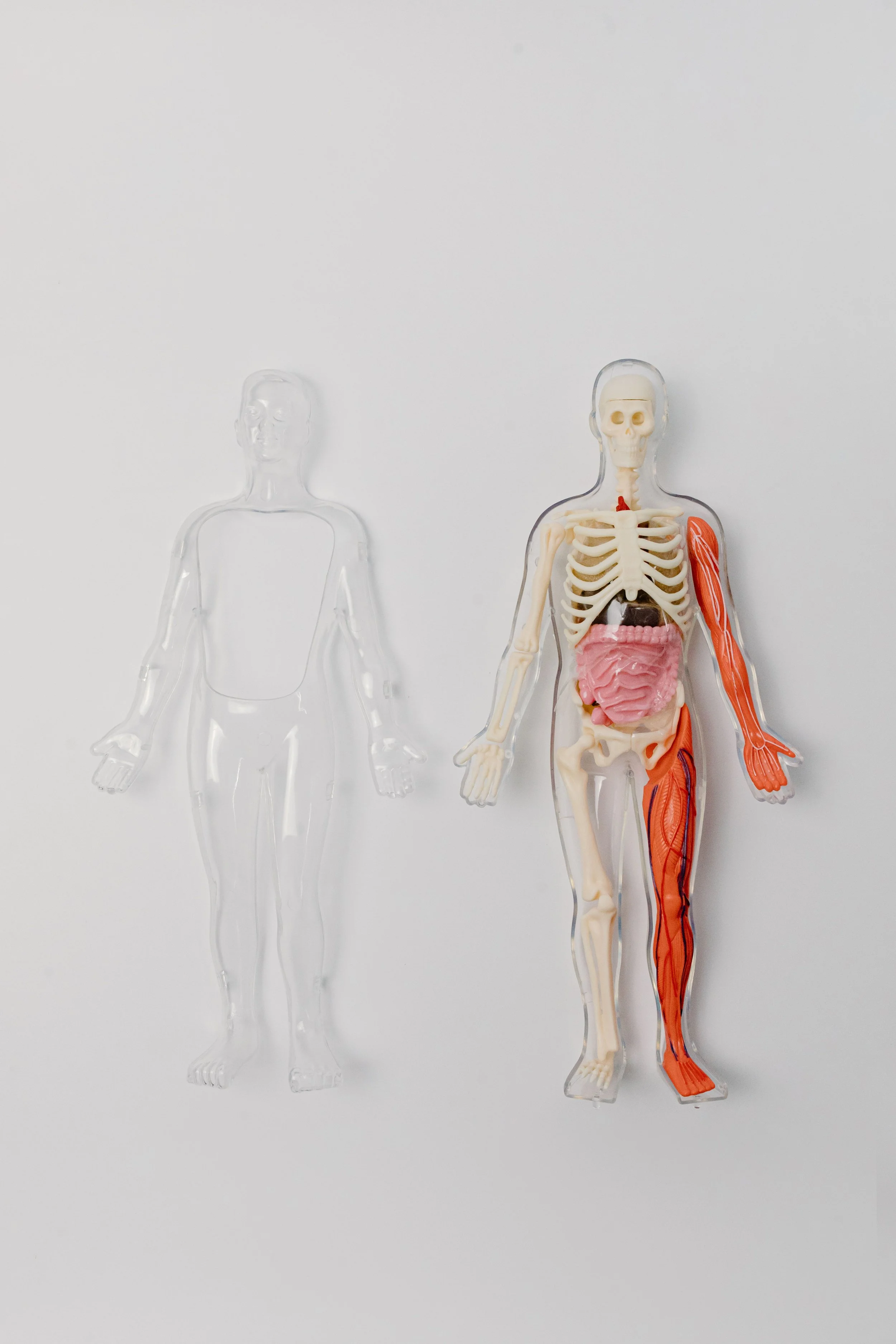
Anatomy of Medical School
Cover image by Tara Winstead
By Althea Need Kaminske
I work as a Medical Education Learning Specialist (MELS) at a large medical school in the US. My job is to take the science of learning and apply it to a very specific educational environment: undergraduate medical education. While a fair bit of that involves breaking down the science of learning, it also requires understanding the context in which the learning is taking place. In this post I want to explain the basic structure of medical school and licensing exams. This may be of interest to any incoming or aspiring medical students (particularly within the US since I will focus on the US medical school system), MELS colleagues, or anyone who knows someone in medical school and is curious about what it’s like.
Medical school, as a pre-professional school that trains students for the responsibility of patient care, presents some unique challenges. Medical students are future physicians, and are expected to be knowledgeable in both a wide array of medical knowledge as well as clinical best practices. Training medical students becomes more challenging each year as the amount of medical knowledge only ever increases. Upon graduation, a medical doctor is a generalist - they must possess a broad skill set, ready to enter into a number of specialties. Medical schools can vary widely in how they approach the education and training of medical students, though there are some notable similarities in medical schools around the world. They tend to have similar phases of training: a pre-clinical phase that focuses on medical knowledge, a clinical phase that focuses on exposure to clinical practice in a core set of specialties, and a career-exploration phase where students gain clinical experience in specialties that they want to focus on. Training in medical school also includes a focus on licensure exams specific to the country one will be practicing in. Finally, both clinical skills and medical knowledge are assessed throughout.
Allopathic vs Osteopathic
Medical schools within the U.S. can vary as to whether they offer allopathic or osteopathic training. Allopathic medicine focuses on the diagnosis and treatment of diseases and allopathic schools grant Medical Doctorates (M.D.s). Osteopathic places a greater emphasis on holistic medicine, treating the body as an interconnected whole, and osteopathic schools grant Doctorates of Osteopathic Medicine (D.O.s). Within the U.S. about 70% of medical students are working toards an M.D. and 30% are working towards a D.O. (https://www.aacom.org/become-a-doctor/about-osteopathic-medicine/quick-facts). While there are differences between the two traditions of medical training, notably the emphasis on physical manipulation within osteopathic programs, the structure of these medical programs has converged over time. Both are comprised of pre-clinical coursework, core clinical training, and career-exploration.
Board Exams
Given the responsibility of a medical doctor, students must pass licensure exams in addition to regular course requirements. In the U.S. the National Board of Medical Examiners (NBME) delivers the United States Medical Licensing Exam (USMLE) in a series of three “steps”: Step 1, Step 2, and Step 3. Similarly, the National Board of Osteopathic Medical Examiners (NOBME) delivers the Comprehensive Osteopathic Medical Licensing Examination (COMLEX) in a series of three levels: Level 1, Level 2, and Level 3. Medical schools vary as to when students are required to take and pass the Step exams. Students may graduate with an MD, or DO, having met the requirements of their degree program, but are not able to practice as a licensed physician until they have passed all three licensure exams. Given the importance of licensing exams, it is difficult to discuss learning in medical school without addressing how to prepare for these major exams.
Photo by RF._.studio _
QBanks
The extraordinary volume of information and the high-stakes nature of the board exams has led to an entire industry of test-preparation tools. While there are a few different types of study tools marketed towards medical schools, the biggest ones are question banks (QBanks). Selection and use of QBanks is one of the most prominent features of any board exam prep. These tools - UWorld, Amboss, or TrueLearn - to name a few, leverage the use of retrieval and spaced practice to improve understanding and retention of material. In preparation for board exams, students frequently exhaust these QBanks, which have thousands of questions in them. Something that surprised me as I started my role as a MELS, was how ubiquitous these QBanks are and how students were already very familiar with the concept of retrieval practice (I recently wrote about this with some other cognitive psychologist MELS!).
Undergraduate, Graduate, and Continuing Medical Education
As I mentioned above, I work primarily in undergraduate medical education. As a PhD, this was initially confusing for me. I completed my undergraduate training at university alongside pre-med students. I then went on to graduate school at the same time that some of my classmates went on to medical school. In medical education, undergraduate medical education, or UME, is distinguished from graduate medical education (GME). UME refers to schooling prior to obtaining an M.D. or O.D., and GME refers to training as a resident within a specialty. Thus, medical students complete general undergraduate education then go into medical school where they complete undergraduate medical education.
Within UME, medical students must take and pass the first 2 out of 3 board exams to be able to practice as a licensed doctor. Once in a specialty specific residency program (e.g., family medicine, general surgery, pediatrics, etc.) they are expected to take the third exam to be fully licensed as a general practitioner. At this GME level they are also in training to take their specialty-specific board exam. Each specialty oversees and administers their own standards for within their discipline, and residents within GME must take and pass those exams as well.
Because of the ever-growing body of medical knowledge, and fast-evolving best-practices, all practicing physicians must maintain active certification within their specialty. This phase of medical education is called Continuing Medical Education (CME). All physicians must continue with CME throughout their career in order to remain certified within their specialty. While the nature and pace of these exams is very different from UME (medical students take A LOT of exams), anyone going into medicine needs to be able to take and pass board exams as part of their professional skill set.
Given the constant need for learning new information and the expectation to demonstrate that knowledge on exams, a growing professional field within medical education is Medical Education Learning Specialists (MELS). MELS help learners (whether at the UME, GME, or CME level) to adjust their study strategies and test taking strategies in order to be as successful as possible. I view my job as helping learners to understand their learning in the context of whatever they are going through. Oftentimes, study strategies developed outside of the context of medical education are not successful within medical education. The high volume of content, high-stakes nature of the exams, and increasing and changing professional responsibilities make studying and passing exams markedly different within medication education compared to university, as well as different across UME, GME, and CME.