
Learner Perceived Similarity and Transfer
Cover image by katerinavulcova from Pixabay
By Althea Need Kaminske
Transfer of learning, the process by which people can recognize and apply previously learned information to different situations, is one of the primary goals of education. We can think of transfer and learning as happening along a continuum from highly similar to highly dissimilar. Learning, when people recognize and apply knowledge to the same problems, is on the highly similar side. After that, near transfer is when people recognize and apply knowledge to novel problems that are similar to how the information was learned. Then, far transfer is when people recognize and apply knowledge to novel problems that are not similar to how they were learned. Finally, overextension is when people apply knowledge to novel problems that so different from what they learned that the transfer inappropriate (1).
In typical studies on transfer whether something is near or far transfer is based on the experimenter’s, or a subject matter expert’s, categorization. For example, we might use this framework to ask questions about how retrieval practice affects learning. Does practicing retrieval only improve memory and performance for the already learned information, or does it benefit transfer to new material as well? (see this post for some of Cindy’s research in this area!). While categories of near and far transfer might be more accurate reflections of how similar or dissimilar information is, these categories may not reflect learner perceptions. This is particularly important as previous research has shown that learners are more likely to transfer their knowledge if they perceive situations as more similar (2).
A recent study (Menendez, 2026) examined how learner perceived similarity affects transfer (1). Across two experiments participants learned about metamorphosis in the life cycle through a short video. At pre-test and post-test they were given a life cycle task. The life cycle task gives a picture of an animal on the left and a picture of an animal on the right and either asks, “Could the one on the left look like the one on the right when it is an adult?”, or, “Could the one on the left have a baby that looks like the one on the right?” The picture on the right could either be a change in size of the one in the left, a metamorphosis, or a species change. Learners also completed a similarity task where they where asked to group pictures of animals together based on similarity (in the first experiment this was done at the beginning of the first session, and in the second experiment it was done at the end). Finally, participants took another post-test roughly one month later.
The results can be broken down in terms of researcher-based similarity (in this case they looked at learning, transfer, and overextension) and learner-based similarity.
Researcher-based similarity
Learning
The lesson during the experiment focused on metamorphosis with ladybugs, so the researcher measured whether participants were more likely to correctly recognize metamorphosis of the lady bug when presented with pictures. Across both experiments participants were more likely to endorse metamorphosis for the lady bug at both immediate and delayed post-tests to pre-test. They learned!
Transfer
To measure whether participants could apply the concept of metamorphosis to similar problems, the researcher looked at whether participants correctly recognized metamorphosis of nonladybug insects. Across both experiments participants were more likely to endorse metamorphosis of nonladybug insects at both immediate and delayed post-tests compared to pre-test. They transferred!
Interestingly, in both experiments participants who did better on the pre-test were more likely to transfer, suggesting that prior knowledge helps with transfer.
Overextension
To measure whether participants were overextending the concept of metamorphosis, the researcher looked at whether participants incorrectly identified metamorphosis in noninsects. The findings on overextension were a little inconsistent between experiments. In the first experiment participants were more likely to overextend on the immediate post-test if they had higher pre-test scores and if they showed more learning. There was no evidence of overextension on the delayed post-test. In the second experiment there was no evidence of overextension on the immediate post-test or the delayed post-test.
Learner-Based Similarity
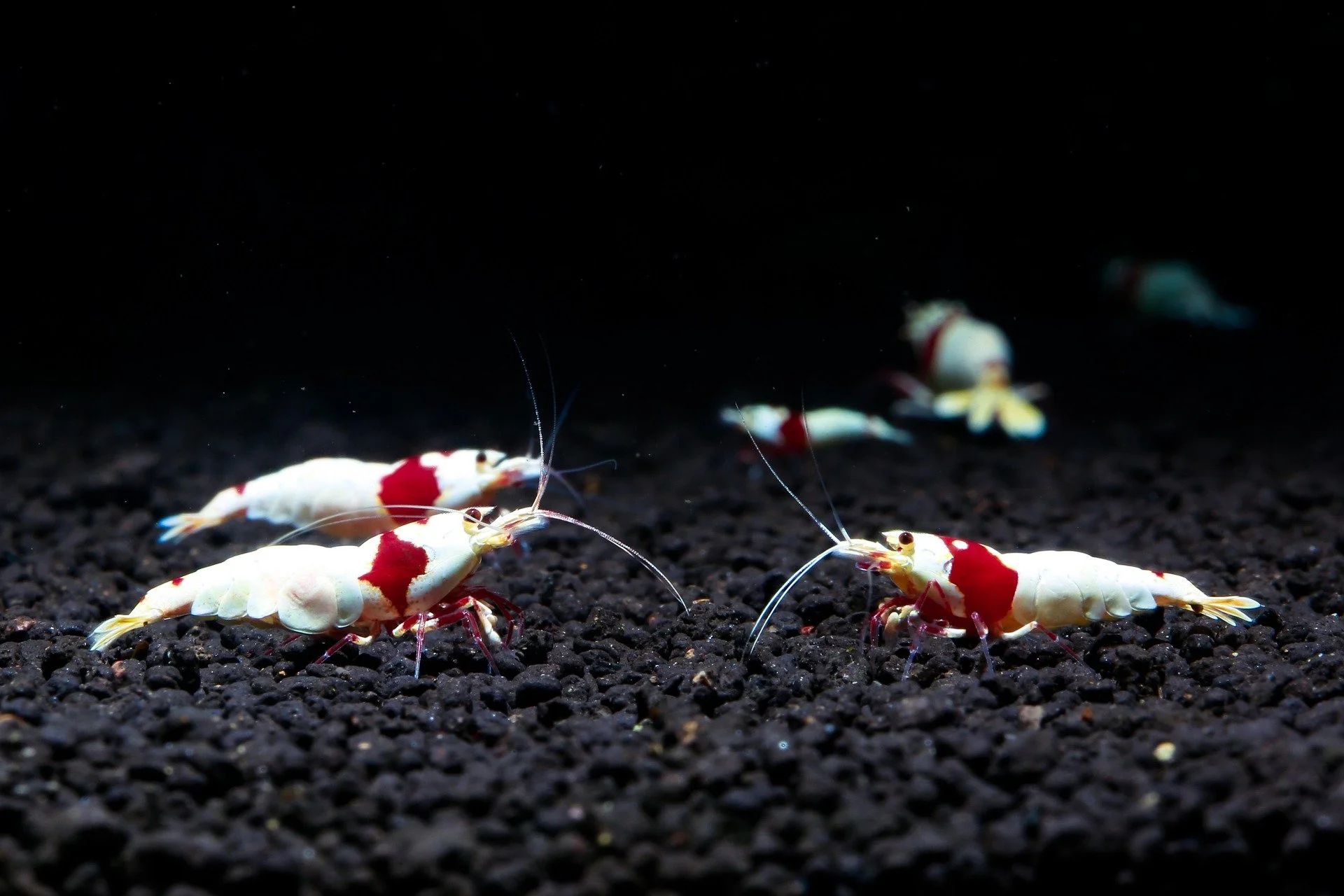
Participants categorized items by moving pictures of the animals into groups on the screen. The researcher measured the distance between the mid point of those pictures to get a difference score for the pictures. The participants’ rating of similarity generally agreed with the pre-defined categories. Generally, items that would be considered learning (i.e., ladybugs with other ladybugs) were grouped closer together than items that would be used to test transfer (i.e., ladybugs with insects), and items that would be considered overextension were farthest apart (i.e., ladybugs and non-insects). However, when the clusters of pictures were organized it became apparent that participants generally categorized items differently than the taxonomic classifications that guided the researcher’s pre-defined categories. For example, participants generally grouped animals together as land animals, ants, and aquatic animals. These sometimes resulted in very different animals being grouped together by surface features (e.g., snakes & worms or grouping shrimp with aquatic animals generally instead of with other arthropods).
Across both experiments, learner-based similarity was a consistent predictor of transfer. The closer the learner had placed the animal to the ladybug, the more likely they were to endorse metamophosis for the ladybug.
This set of experiments reveals some interesting things about transfer and learning. First, the way that learners, as novices, think about categories is not always the same as how experts think about these categories (3). Second, these differences between how learners categorize information and how educators categorize might account for some of the differences, or difficulties, we see with transfer. Finally, it makes sense then that transfer is also influenced by prior knowledge. As learners build their understanding, and their thinking becomes more expert-like, they are better able to transfer (especially if transfer is being measured based on expert-defined rather than learner-defined categories).
References
Menendez, D. (2026). From expert to learner metrics of transfer: How learners’ perceived similarity predicts transfer and moderates instructional practices. Journal of Experimental Psychology: Applied. Online first. http://doi.org/10.1037/xap0000566
Klahr, D., & Chen, Z. (2011). Findings one’s place in transfer space. Child Development Perspectives, 5(3). 196-204. https://doi.org/10.1111/j.1750-8606.2011.00171.x
Chi, M. T. H., Feltovich, P. J., & Glaser, R. (1981). Categorization and representation of physics problems by experts and novices. Cognitive Science, 5(2), 121–152. https://doi.org/10.1207/s15516709cog0502_2