

Are You Sure You're Spacing?
[cover image by akshayapatra on Pixabay]
by Cindy Nebel
What is the spacing effect? Let’s start with a little quiz shall we?
Quiz
Which of the following involves spacing?
A. A new hire has a week-long onboarding. They learn the company’s pricing tiers on Monday morning. They see the same pricing chart again in a short quiz on Wednesday and again in a role-play activity on Friday.
B. Company A has traditionally had an 8-hour orientation on the first day of the month for all new hires. They are trying out a new system where they instead do 8 1-hour sessions spread out over the first two weeks of the month.
C. An instructor switches from teaching Chapter 1 for a week and then Chapter 2 the next week to instead teaching one concept from each chapter and then coming back and teaching the next concept from each chapter.
D. A music teacher lets students practice on their instruments for only half of the class before switching to reading music. The next class they do the same thing.
E. Instead of studying all five chapters on Thursday night, a student studies Chapter 1 on Sunday, Chapter 2 on Monday, etc. in order to prepare for the exam on Friday.
F. All of the above
Does this feel like a trick question to you? It might! Read on to find out the correct answer!

Image by congerdesign on Pixabay
New Study
Today I’m reviewing a study that recently came out looking at how students choose to use spacing in their own study and how it relates to their performance (1). Importantly, the researchers recognized a limitation in the way students were being asked about their study habits in previous research on spacing. Here are common ways that students are asked about spacing their study habits:
Which of the following statements best describes when your studying occurred during the weeks leading up to this exam?
A. The majority of my studying occurred 1-2 days before the exam.
B. The majority of my studying occurred during the 7 days before the exam.
C. The majority of my studying occurred more than a week before the exam.
D. My studying was pretty evenly spread out across the weeks.
This question is aimed at looking at cramming behavior in particular and research DOES show that students tend to cram and do most their studying just before any given exam (2). However, what students are doing when they do spread out that study matters quite a lot too.
The true spacing effect, as measured in experimental research, is a spaced review effect. That is, the same material is reviewed multiple times, spread out over sessions. It is not that everything is viewed once, spread out over time.
In this study, they added a new question:
Please rate your agreement with the following statement: When studying different concepts for this exam, I made sure that I studied the very same concepts more than once.
This question is targeted at the review part of spaced review, not just the distance between study sessions.
Results
Unsurprisingly, most students crammed in this study, but there was actually quite a bit of variability as to whether their cramming sessions involved reviewing the material more than once.
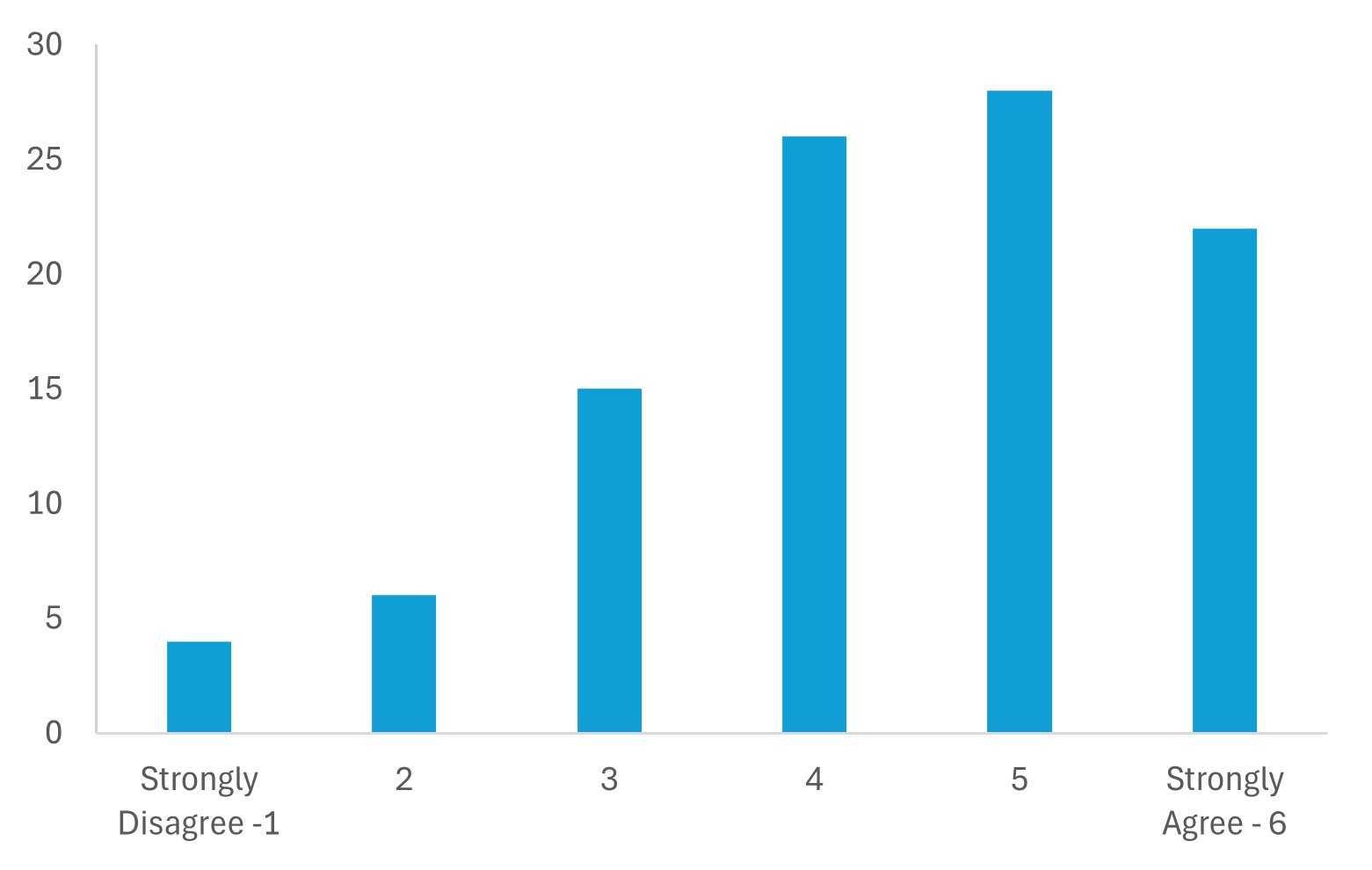
Image recreated from cited source. Numbers are approximate averages across both samples.
When looking at the exam scores, the degree to which students spread out their study vs. crammed wasn’t related much at all, BUT the degree to which they reviewed concepts was! The more that concepts were reviewed, the better students performed, even when controlling for total study time. That means some students spent the same amount of time studying, but the ones who cycled through material instead of studying one thing at a time in big chunks did better on the exam.
Quiz Results
Based on the literature on the spacing effect and the study described here, the correct answer to the question at the top of this post is….
A and D only
In B, C, and E, new material is spaced out over time, but it isn’t reviewed. That’s not going to result in a spacing effect.
There might be some other benefits to spacing out the acquisition of new knowledge. As we take in more and more information, we can become cognitively fatigued and experience something called proactive interference. Taking a break and coming back fresh may help us to encode that information more effectively than trying to sit through that 8-hour training session. But this isn’t a spacing effect. It’s about the importance of taking breaks.
Bottom Line
I found this study to be an important one to share because there is often a conflation between spreading out new information and spacing out review of old information. In order to maximize student retention, we want to make sure we are revisiting taught information instead of talking about it once and moving along to the next topic. This can be done through structured review sessions, but also through delayed homework (think about assigning Chapter 1 homework while teaching Chapter 2 in class) or retrieval practice opportunities (think bell work that covers old material or cumulative low-stakes quizzes). While it might be beneficial to cover material in smaller chunks, spacing is about making sure you come back to those chunks over time.
References:
(1) Malain, E. D., & Hartwig, M. K. (2026). Self-reported spaced study: Associations with college students’ grades and self-regulation. Journal of Experimental Psychology: Applied. Advance online publication. https://dx.doi.org/10.1037/xap0000562
(2) Hartwig, M. K., & Dunlosky, J. (2012). Study strategies of college students: Are self-testing and scheduling related to achievement? Psychonomic Bulletin & Review, 19(1), 126–134. https://doi.org/10.3758/s13423-011- 0181-y